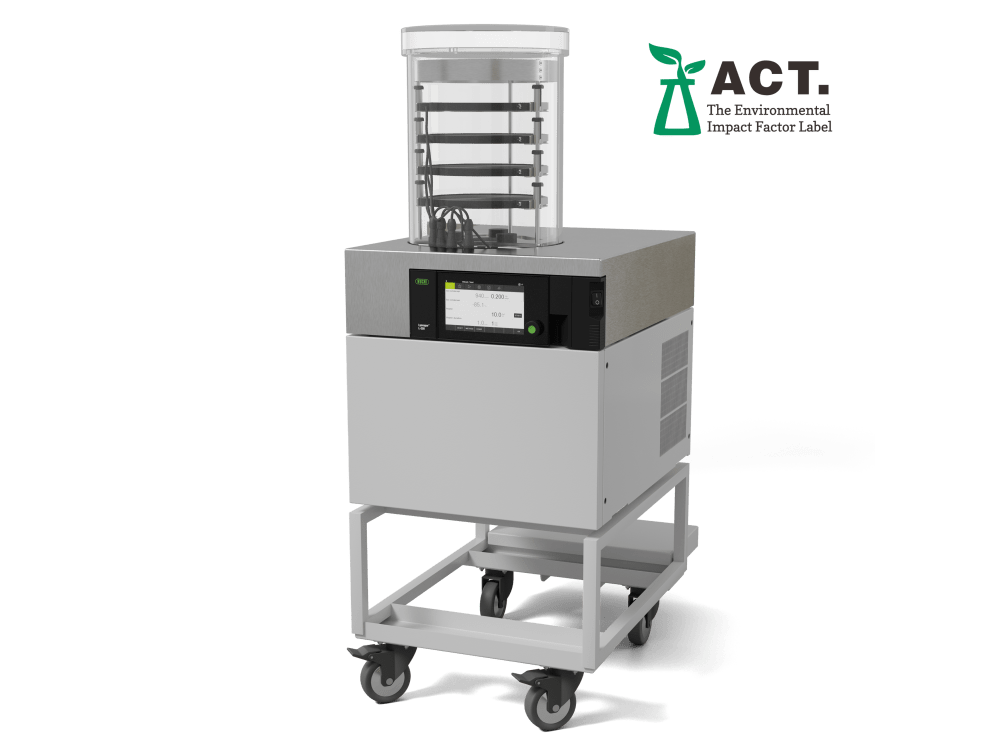
Contamination-free and sterile freeze-drying using lyophilization bag
Freeze-drying is typically used to deal with sensitive and expensive samples as it offers a gentle drying process. One way to avoid contamination in the drying process is the use of a container with membrane that protect samples from contamination and secondly keep product flyout in place which protects multiple samples from cross contamination.

Freeze-drying is typically used to deal with sensitive and expensive samples as it offers a gentle drying process. One way to avoid contamination in the drying process is the use of a container with membrane that protect samples from contamination and secondly keep product flyout in place which protects multiple samples from cross contamination.
Weitere Instrumente
Ähnliche Applikationen
Preserving peptide integrity by freeze-drying
Following purification by HPLC, peptide solutions are typically freeze‑dried to remove solvents, a process that preserves structural integrity and biological activity while minimizing aggregation. Samples are processed in beaker flasks to facilitate easy collection and reduce product loss. The resulting lyophilized material is consistently obtained as a fine, fluffy powder without collapse or stickiness, ensuring physical stability suitable for long‑term storage and downstream therapeutic or research applications

Stabilizing oligonucleotides for long-term storage by freeze-drying
Freeze-drying preserves their integrity and extends shelf life of Oligonucleotides, short DNA or RNA sequences. Using the Lyovapor™ L-250, 50 mL Falcon tube samples were rapidly frozen in liquid nitrogen and dried in a 12-port manifold at 0.1 mbar, producing stable pellets in 16 hours. Multiple trials showed reproducible results, demonstrating reliable vacuum control, and effective vapor trapping.

The use of organic solvents in laboratory freeze-dryer
Freeze-dryers were initially intended to be used with water as a solvent. With new applications, freeze-drying is consequently being used more and more in combination with organic solvents instead of water. Organic solvents and inorganic acids and bases are often used in research and development prior to lyophilisation of the sample. The behavior of these new types of samples during freeze-drying must therefore be considered prior to the process.
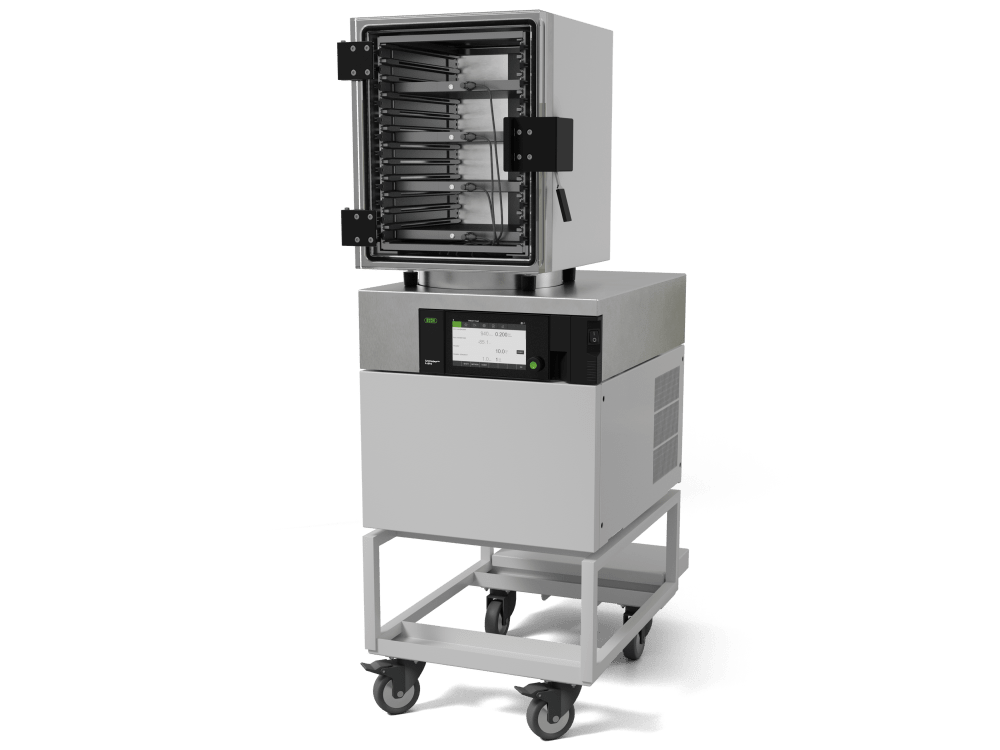
Freeze-Drying of deepwell plates using Frontloader drying chamber
Deepwell plates, also microwell plate, are often found in pharmaceutical and biological laboratories for processing a large number of samples. In this application note, BUCHI Frontloader drying chamber demonstrates the successful freeze drying of 300 uL deepwell plates using a Lyovapor™ system.
combined with the The high number of samples can be freeze dried in one plate allows quick
and easy handling. This includes freeze-drying as well. T

Freeze-Drying of banana sample in Frontloader drying chamber
Fruits such as bananas, with their delicate texture and high moisture content, present unique challenges in preservation. Anyhow, the sample throughput is limited by available surface in freeze dryer since only a monolayers of sample can be dried in parallel. This application note highlights the process parameters, advantages, and outcomes of banana freeze-drying in a Frontloader drying chamber, offering insights into improved stability and storage.

Lyophilisation of fresh banana slices
Freeze drying is a gentle form of drying and may be used to preserve foods without changing their appearance or taste. The freeze drying process includes the freezing of the food sample and subsequent applying a fine vacuum to the frozen sample. Under these conditions, the water in the food will sublimate, hence, the sample dries. In food applications, freeze drying is commonly used to make instant coffee and to dry and conserve fruits, vegetables or herbs.