Microencapsulation of Nucleic Acids by Spray Drying

Nowadays, efficient treatment of several diseases involves innovative therapeutic approaches. Gene therapy retains the interest of numerous researchers and was highlighted regularly as a potential approach to treat disease caused by genetic disregulations such as cystic fibrosis, hemophilia or cancer. The use of gene therapy for vaccination is also mentioned in the literature as an alternative to conventional live/attenuated viral treatments.
Different routes of administration (intravenous, ocular, topical or pulmonary delivery) have been investigated for nucleic acids, however, delivery system design and formulation remains challenging due to nucleic acid instability after administration. To date, nucleic acid therapies are mainly based on viral and nonviral delivery system. Viral delivery systems are using the ability of viruses to enter the cells and release the nucleic acid with ease whereas non viral delivery system are methods that do not involve viruses.
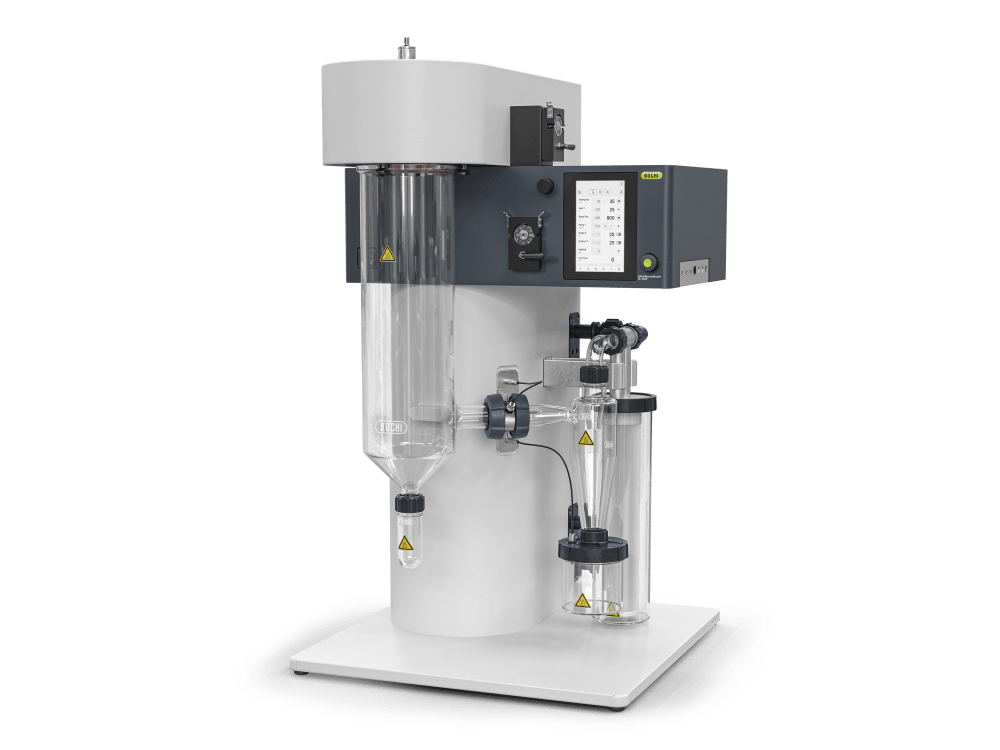
When focusing on non-viral delivery systems, most authors of current publications are using nucleic acids in form of nanoparticles. Amongst the available techniques to encapsulate nucleic acids, spray drying, with its one-step process, scalability and control of particle properties, is an excellent option to process solutions, suspensions or emulsions into dry powder formulations with engineered functional properties such as defined particle size and density. Spray drying has been used extensively for a number of applications in the formulation of biopharmaceuticals intended for pulmonary delivery and inhalation and was reported to show potential to encapsulate nucleic acids.