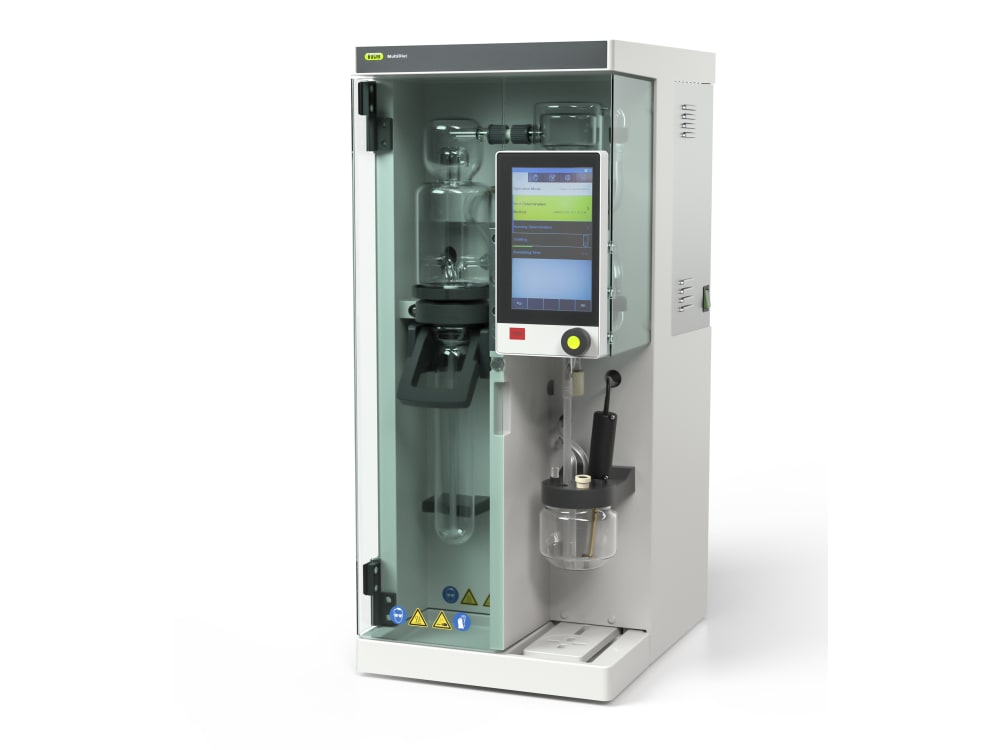
Hydrogen cyanide determination in food and feed
BUCHI Cyanide caps for safe working conditions and high recoveries

Cyanogenic glycosides occur in many food and feed products like almonds, bamboo shoots, cassava, lima beans, sorghum and stone fruits and are formed of cyanohydrins which have been stabilized by glycosylation. In the glycosylated form, the cyanogenic glycosides are supposed to be nontoxic, but when digested, the intestinal flora enzymes decompose the cyanogenic glycosides into hydrogen cyanide (HCN) which is highly toxic to humans.Here, we describe a method for the quantitative determination of hydrogen cyanide after enzymatic hydrolysis of the cyanogenic glycosides in almonds, bakery products, kernels, persipan (apricot kernel paste) and marzipan (almond paste) raw mixtures using amygdalin as a model compound. The method is in accordance with the international Standard ISO 2164-1975 and the AOAC Method 915.03.