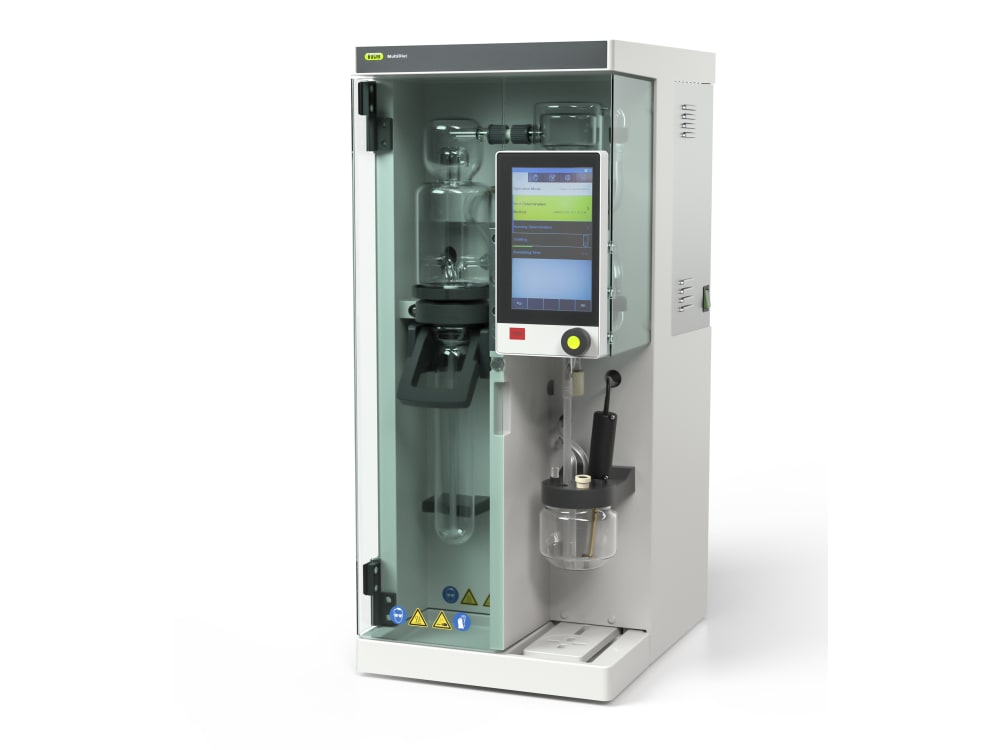
Determination of volatile acids in wine and juice
Distillation Unit K-355: Determination of Total SO2 in wine

The main part (>95 %) of the volatile acidity in wine and juice is acetic acid which is formed by oxidative or anaerobic fermentation. The average level of acetic acid in a new dry table wine is less than 400 mg/L, though levels may range from undetectable up to 3 g/L. A too high level of volatile acids is an indicator for a low quality and acetous product. In Switzerland, for example, the tolerance level of volatile acids is 1200 mg/kg. In the USA the legal limits are 1200 mg/kg volatile acids for white wine and 1400 mg/kg for red wine. Here a method for the volatile acid determination, based on steam distillation and performed in the laboratories of Schenk SA in Rolle Switzerland, is presented. Steam distillation is the preferred method for volatile acid determination and described in detail in normative procedures. Importantly, the used distillation equipment can be used for volatile acids and alcohol determination.